Monday, January 10, 2011

Cherubs And Putti

A Large German Meissen Cherub Compote from the Down River Parlor.
  Cherub or Putti, is a figure of a human baby or toddler, almost always male, always naked and having wings, found especially in Italian Renaissance and Baroque Art. The  figure derives from ancient art,but was rediscovered in Allegorical,non-literal figures and latter in Christian Art.
   Cherubs  or Putti are associated with Aplrodite and so with Romance,Love and also with Heaven, Peace,Prosperity and Leisure. No wonder we all love them.
   Putti is a Latin word,"PUTUS," meaning little man. Not so much babies-they are not human,but spirtual beings,winged little people of mostly undetermind gender.
 Cherub or Putti art, came to represent the precense of God. They have been painted since the 13th Century.
  A Cherub is sometimes thought of as a divine being-often mentioned in the Bible, usually understood as a high ranking Angel.
   In modern English, the word, Cherub, is usually used for what are strickly baby or toddler Angels in art.
   No matter what the meaning, Cherub or Putti are very addictive. Some what like drugs. The more one has of them, the more they want. I want it, I have to have it, I can not live with out it. It is almost impossible for me to turn one down.

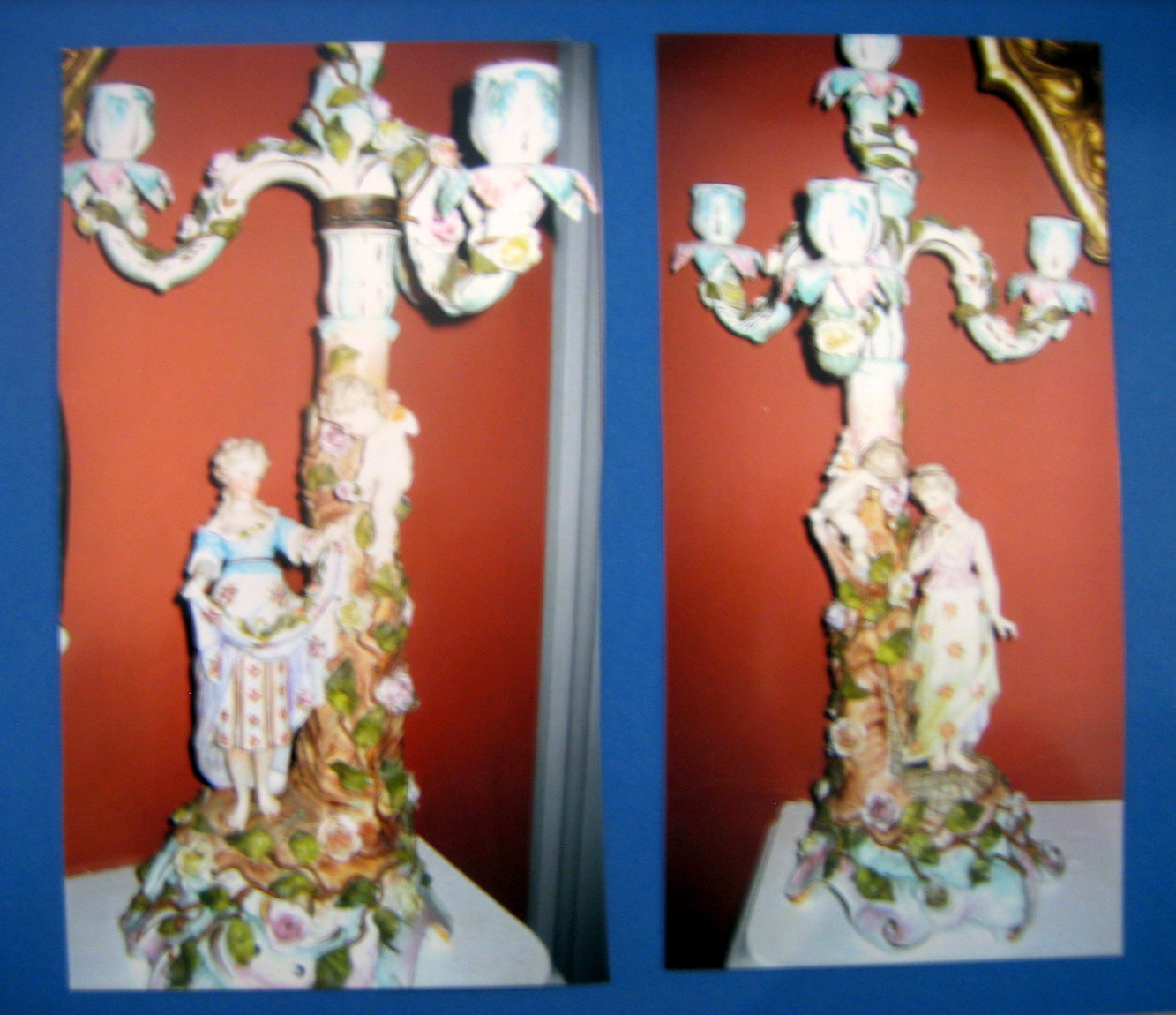
Large German Meissen Figure Group of  Angels and Cherubs from Entrance Hall.


Beaded  Framed French Needlepoint in Up River Parlor.


Italian Capa De Monte Figure Group of Aplrodite and Putti on Entrance Hall Table.


Pir French Bronge Cherub Candle Holders from Mantle in Up River Parlor.

Entrance Hall, Lee Jofa Wallpaper.


Pair German Bisque Plaques from Powder Room.


French Fireplace Screen, Down River Parlor.

French Carved Wood Gold Gilt Pedestal.

French Sevres Box.

German Meissen Figure Group.

Meissen Cherub Shoes.

French Old Paris Fan Vase.


Etergee in Purple Guest Room With German Meissen.


Italian Majolica Urn on Pedestal from Up River Parlor.


French Terra Cotta Bust  from Library.

German Dresden Lamp in Purple Guest Room.

Dining Room Wallpaper Boarder by Raymond Waites.

Pair German Dresden Candle Holders from Master Bed Room Mantle.


 Italian Carved Wood with Gold Gilt  Sconce in Up River Parlor.


Plates I use for parties from Nieman Marcus.


A Verson of a large German Meissen Compote in the Down River Parlor.
    Designers and Decorators have been using Cherubs and Putti for years. They are found in art,candle holders,clocks,china, furniture,wallpaper, needlepoint and every part of the interior and exterior of a home. I am no exception. I have been collecting them for years. Almost every room in my home has a least one, and most rooms have several..
  I hope you enjoy seeing my collection as much as I enjoyed collecting it. And I am sure I am far from done collecting.
  Please check out my on line store. Thanks and enjoy shopping.
http://www.richadsgreatstuff.etsy.com/   Note you must leave the "second r" out of Richard.Its a long story, I will share someday.

Thursday, January 6, 2011

Porches Before And After


  After -New Front Porch as it looks today.

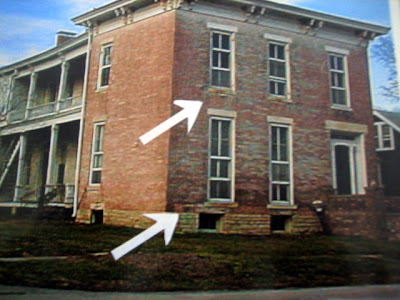
Front of house with no Porch. Arrows mark signs were old porch was.

My Old Historic House, With Sagging Side porches, when I purchased it 2006.


My Old Historic House, Side Porches, as they look today.


Close up of Porch Iron Railings with Sheep and Willow Tree,
 

Front and Side View of My Old Historic House, As it looks Today.


Close up of Porch Columns and Railings.


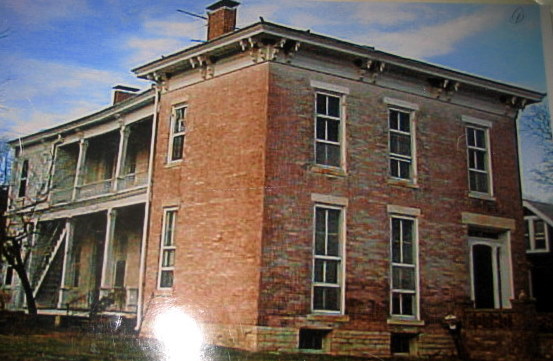
View of My Old Historic House, when I purchased it in 2006.


Front view of house with no front porch.


Front View of the house with  New Porch.

F   When I purchased ,My Old Historic House ,in the spring of 2006, it was in a sad state. It had not been lived in for several years and was not livable, when I bought it.The front porch was missing. According to old timers in Clarksville,the porch was removed after a major flood, from the Mississippi River ,around 1953. A set of brick steps were  put in its place. The side porches had suffered from many years of neglect. The bottom railings were gone and the upper railings were replacements. The roof line was saging, because the stone foundation ,under the porch supports, had crumbled. The porch ceiling was falling in and had became, a home for many birds inside. The columns were all but rotten and is no wonder ,the porch saged here and bowed there.
   The side porches were the first take on. I had purchased the house in  March, of 2006. That summer, I laid into, the two side porches. After most of them were removed, a set of jacks ,was  used, to raise the roof line and make it level. We did not know what would happen. I was afraid the walls would crack or fall in. After all ,the house was ,160 years old, and no one knew what to expect. But, all went well and we got it pretty level. The rest was pretty routine, but far from easy. To reproduce the porch  columns, 56 pieces of wood ,to make each one ,was needed. This ment ,56 cuts to each column and we had 8 to do. I have to admit, it did get easier and faster after the first one or two.Then everything needed 3 coats of paint.
   We used treated wood for the support system. And concrete footings were also used. We covered them, with the cut stone ,from the old porch foundation, so it would apprear the same. This porch should ,out last me.
  I replaced the few porch railings, that were left ,with new, hand made iron ones. I found a company, in Texas, Kings Metals, that had a nice selection of reproduction porch railings. I chose one, with a sheep, under a willow tree. It is a copy from one, found on an old home ,of the period, in the Garden District, in New Orleans. These iron rails, should never need to be replaced, just painted.
  The next major project, took place in the summer of 2007. A new front porch. I could see on the bricks were there was a porch, a line of old paint a discolored bricks, marked the spot. I have always said, if you study an old house enough, it will talk to you, and reveal it's secerets.When we tore off the old brick steps, we found ,parts of the old porch foundation ,in the ground. So we knew there was a porch ,on the front of the house, at one time. I was the architect. I studied a little in High Scool and College, about drafting. So I drew up the plans. I used the side porch as a pattern and winged it, the rest of the way. It took most of that summer, to finish, paint and landscape. I am so very proud of this porch, as it kinda appeared from no where.
  What a difference ,New porches can make. I just love them and they are one of the main reasons, I love this old house. I set on the front porch often, and watch the River. In the winter ,it is a great spot ,to Eagle watch. The up stairs ,side porches, are great for late night summer setting. One can hear the River ,slap at its banks, and see the barges go by. The downstairs side porch is my favorite spot. I love to set there and watch the world go by. Even on the hotest summer days, there is a breeze and lots of smells and sounds of summer. I am a lover and collector of Anique Wicker Furniture, and what a wonderful and exciting place to display it, on all my porches.
  Now, the maintaince on these porches is another store. Every year, I have to sand and repaint the wood floor. The River really takes its tole. The porch railings ,so far, have just needed to be cleaned. Someday ,I am sure ,they will need more paint. Each fall, I clean the spider webs and mud dopper nest, from the porch ceiling and columns. I have to repaint the wicker aften, or it would soon dry and crack off.And in the summer it is sweep, sweep.sweep!
  Come to Clarksville any time and take a tour. Sissy, my beagle dog, is always availabe for a jump and a kiss. I can take you on a tour, or you can just go down and set on the porches and watch the old Mississippi roll by. And if you want, go down town and visit my Antique and Gift Shop. Richard's Great Stuff.It's open every day but Monday, all year long, after I sweep the porches, each day.
 

Side Porches during Restoration.

Saturday, January 1, 2011

French Passe-men-teries

   Passementeries is the art of making eloborate triminings or edgings.
In early France, the word,"passmenterie,"ment lace. Today it is a term used for decorative braids, gimp,fringe,tassels,tiebacks,rosettes and all manner of decorative curtain and upolstery trim.
   The literal translation of this word,"passementere," today,is someone who makes and sells trimmings. These are usually made of silk,cotton and metalic thread. Wrapped  around spools or bundled and cut to length, they are used for trimmings, to accentuates the shape and construction of a rooms soft furnishings, and adds very important finishing touches to the interior of a home.
  The true origin of Passementeries is un- known, but they have been used in home decorating for centeries. After the Industral Revolution, power machines were introduced to make them, no longer needed to be made by hand, made them less expensive and more ready available to everyone.
  In the Georian Period, the upper class took the "Grand Tour," all over Europe. Especially Italy and France. They saw these Passementeries being used in Europe, and wanted them for their homes in America.The highlight of this American desire ,was during the Victorian Era, where rich decoration was taken to new heights. And with the machine made Passementeries being more affordable, they became all the rage.
  Passementeries are often  compared to the decorations or confections on a cake.
   The Southern States in America  were the first to use Passementeries in there homes. Living on a Plantation made these people feel like they were close to being Royals.And They wanted the best, and the latest trends from Europe.
   Today a lot of these patterns are copied from ones that were puchased for homes of the past. From the homes of former American Presidents, River Boat Captains,Civil War Heros and other important members of that American society,come the patterns for Passementeries that we use today.
   The love of Passementeries was so strong that designers were even using Faux (false or fake )  Passementeries in there decorating,   as these  trims were being pictured on printed wallpaper and fabric.
   With the trend in America to preserve the past and restore more and more older homes and buildings, these Passementeries are becoming more and more ready available on the market. Several Company make them and have them in stock. The two companies I use, are Scalamande in New York and Robert Allan in Ma.
Dining Room Curtains.

Peach and Gold Tassel Fringe on Teal Velvet Damask.


Over Sized  Tie backs to match the Fringe.

Two Chairs in the Up River Parlor with Buhl Fringe.


57 Tassels were needed for the Curtains in the two Parlors.


Curtains in the Double Parlors..


Braid on a Needlepoint Pillow.

Fringe on a French Face Fan.

Buhl Fringe on a Needlepoint Pillow.


Bell Flower and Crystal Fringe in Master Bed Room.  By Scalamandre.

Window Trim in Master Bed Room.

Chair in Master Bed Room.


Criss Cross Tassel Fringe Needlepoint Pillow Master Bed Room.


Fringe on Library Curtains.

Bed Spread in My Room.

Pillow Shams in My Room.

Loop and Ball Tassel Fringe Curtains in My Room.

Valance or Cornice in My Room.Double Fringe.


One of my Favorites in .Purple Guest Room.


Swags and Jabows in Purple Guest Room.

Faux Passementeries on Wall Paper in Master Chamber.


Faux Gimp Trim on Inside of Wardrobe.

Faux Tassel and Cord Wallpaper in Purple Guest Chamber.
   In restoring the interior of My Old Historic  House, I knew that Passementeries had to be a big part of the finishing touches. I have used many in almost every room. I can not think that they do not  add  a richness and a finishing touch that is needed in a Victorian Interior.

Thursday, December 30, 2010

Happy New Year from My Old Historic House!


This is a very old,  Victorian ,German Sign.
 
 I send everyone in BLOGLAND, New Years Wishes. Have a safe and happy New Years Eve and the best year ever 2011!   From  My Old Historic House to Your House, Happy New Year ! Richard Cottrell and Sissy Dog the Beagle.